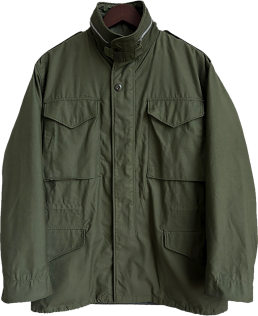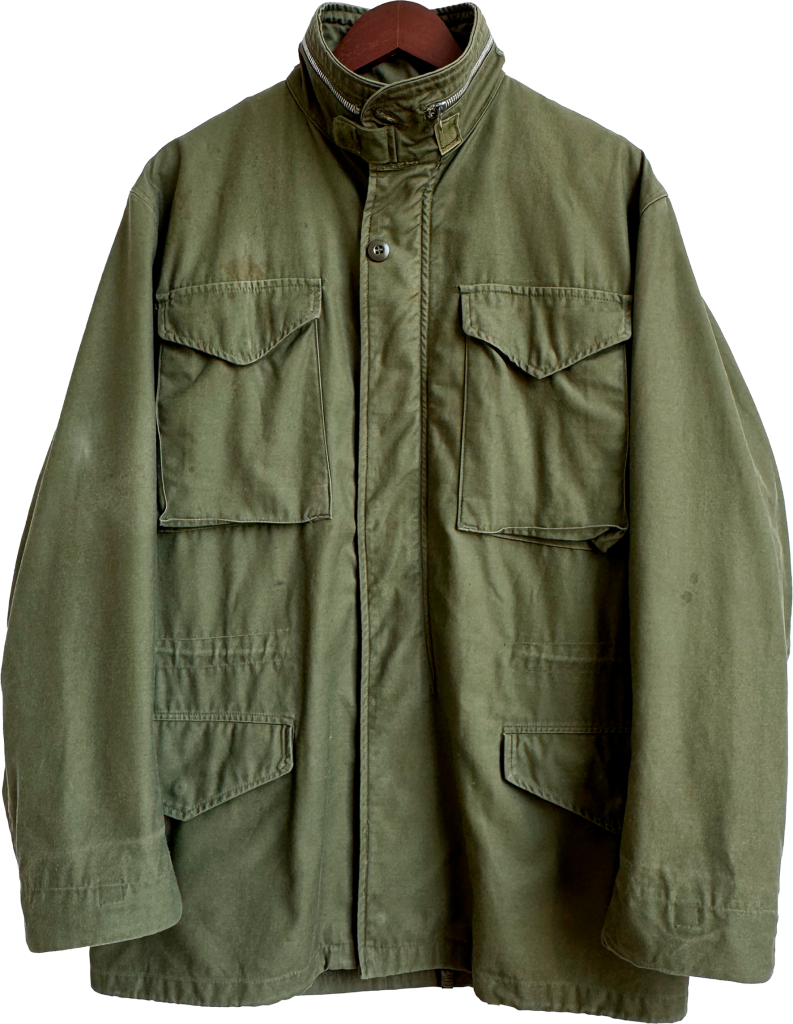
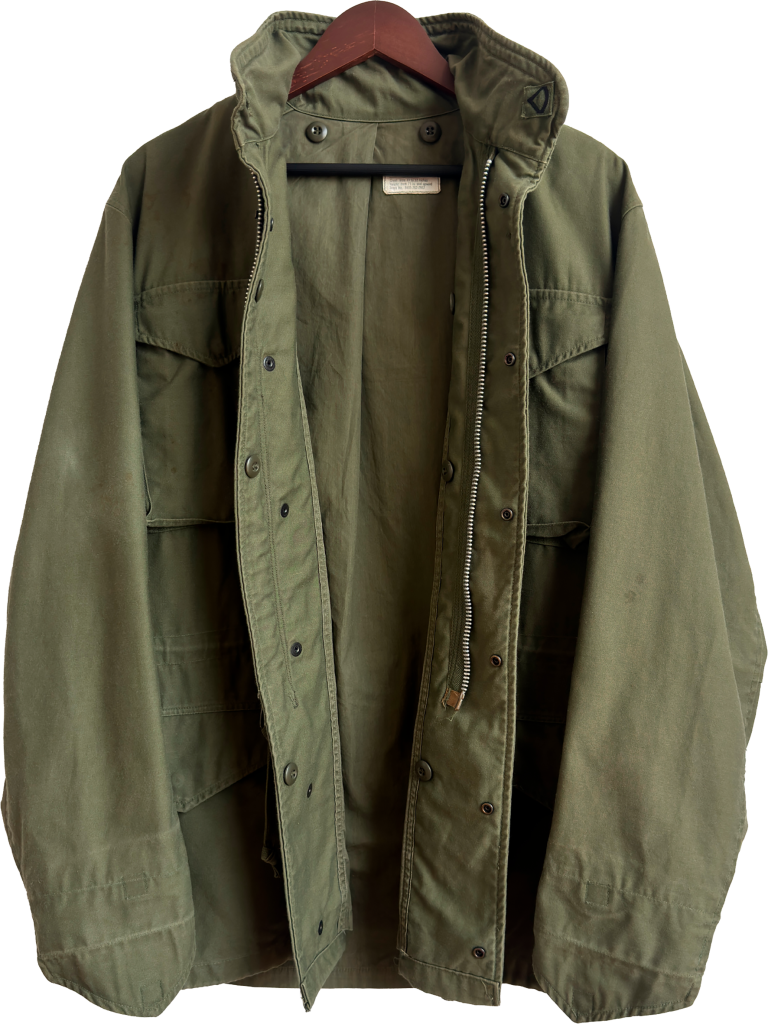
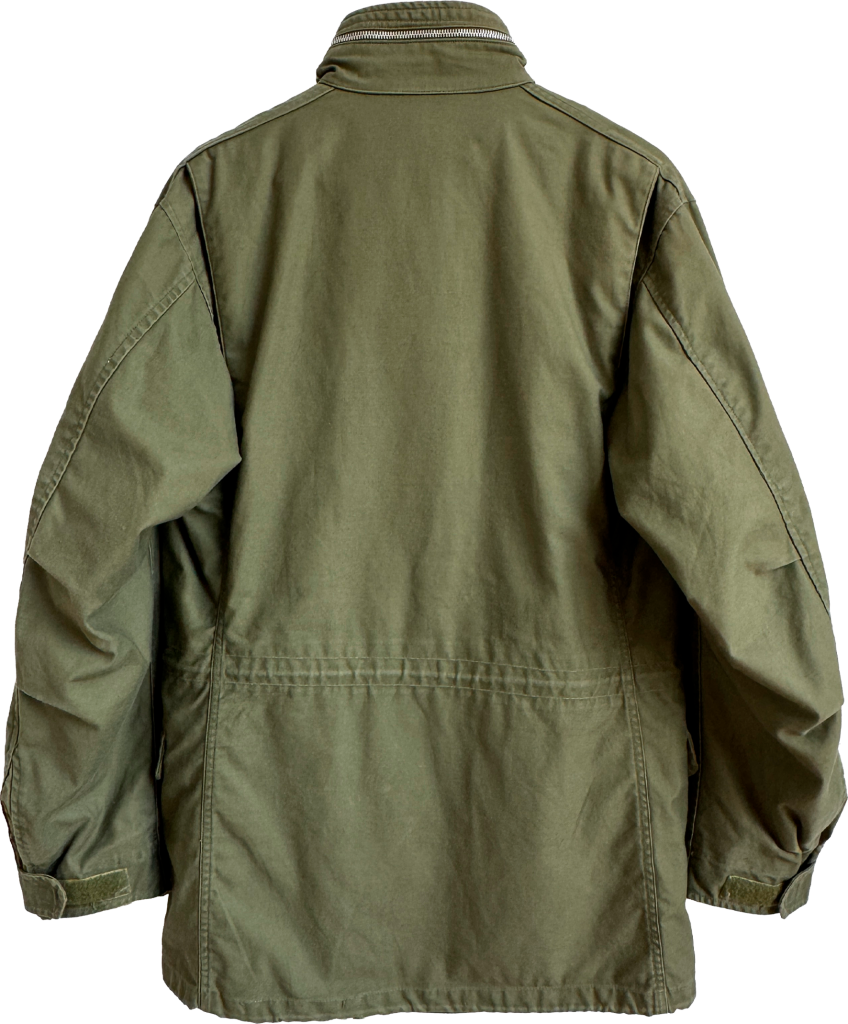


An original 1966 U.S. Army M-65 Field Coat manufactured by Alpha Industries, Inc. under contract DSA 100-1690.
This specimen represents the early First Pattern configuration, distinguished by the absence of shoulder epaulets. It retains its original OG-107 nylon/cotton sateen construction, period labels, aluminum zipper hardware, and original military configuration.
The coat remains in excellent issued condition. Natural fading, surface marks, and service wear remain visible throughout, while the garment remains structurally sound and substantially complete.
SPECIFICATIONS
IDENTIFICATION
NOMENCLATURE:
COAT, MAN’S, FIELD, M-65
SERVICE:
U.S. ARMY
MODEL:
M-65 FIELD COAT
CLASSIFICATION:
ORIGINAL U.S. MILITARY ISSUE
PROCUREMENT
CONTRACTOR:
ALPHA INDUSTRIES, INC.
CONTRACT NUMBER:
DSA 100-1690
STOCK NUMBER:
8405-782-2937
FISCAL YEAR:
1966
COUNTRY OF MANUFACTURE:
U.S.A.
CONSTRUCTION
PATTERN:
FIRST PATTERN
CONFIGURATION:
NO SHOULDER EPAULETS
SHELL:
NYLON / COTTON SATEEN
COLOR:
OLIVE GREEN OG-107
COLLAR:
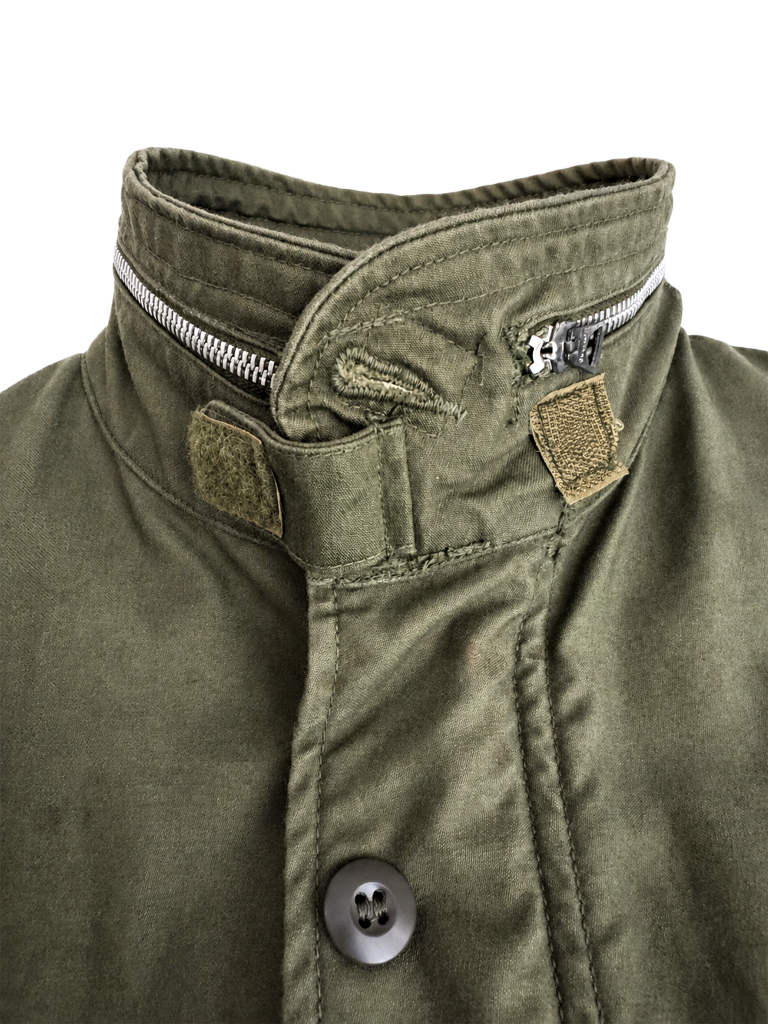
STAND COLLAR WITH CONCEALED HOOD COMPARTMENT
FRONT CLOSURE:
ZIPPER WITH SNAP-FRONT STORM FLAP
POCKETS:
FOUR FRONT CARGO POCKETS
CUFFS:
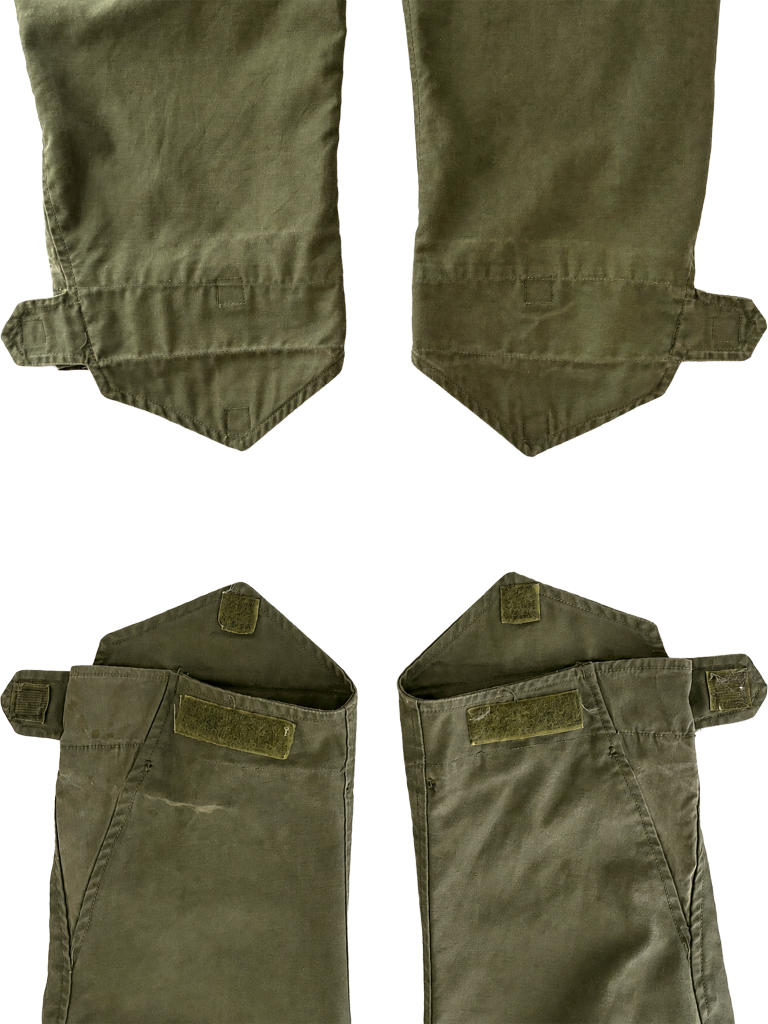
ADJUSTABLE CUFF TABS
WAIST / HEM:
INTERNAL DRAWCORD ADJUSTMENT
HARDWARE
MAIN ZIPPER:
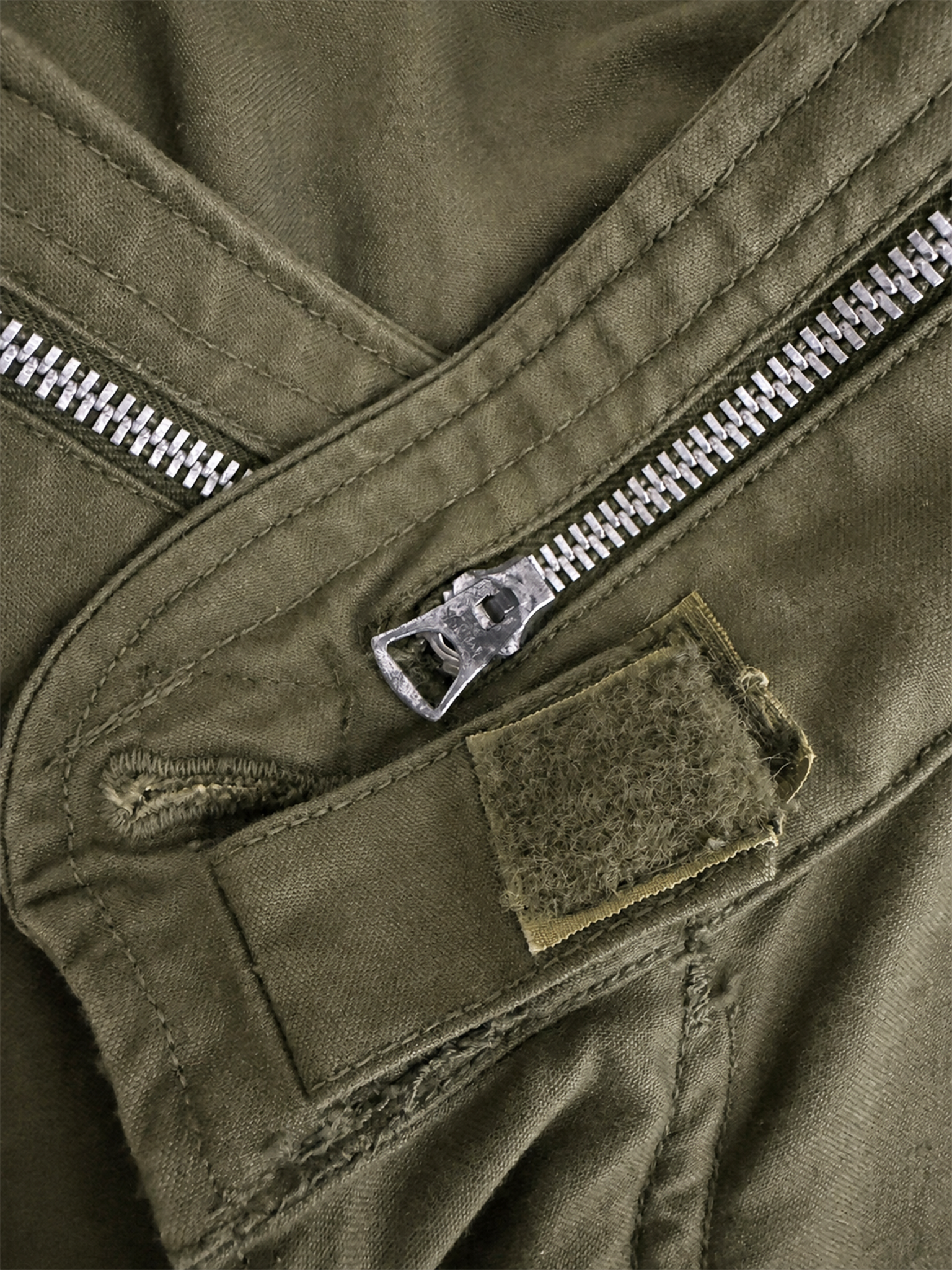
CONMAR ALUMINUM
HOOD ZIPPER:
CONMAR ALUMINUM
ORIGINAL LABELS, MARKINGS & INSIGNIA
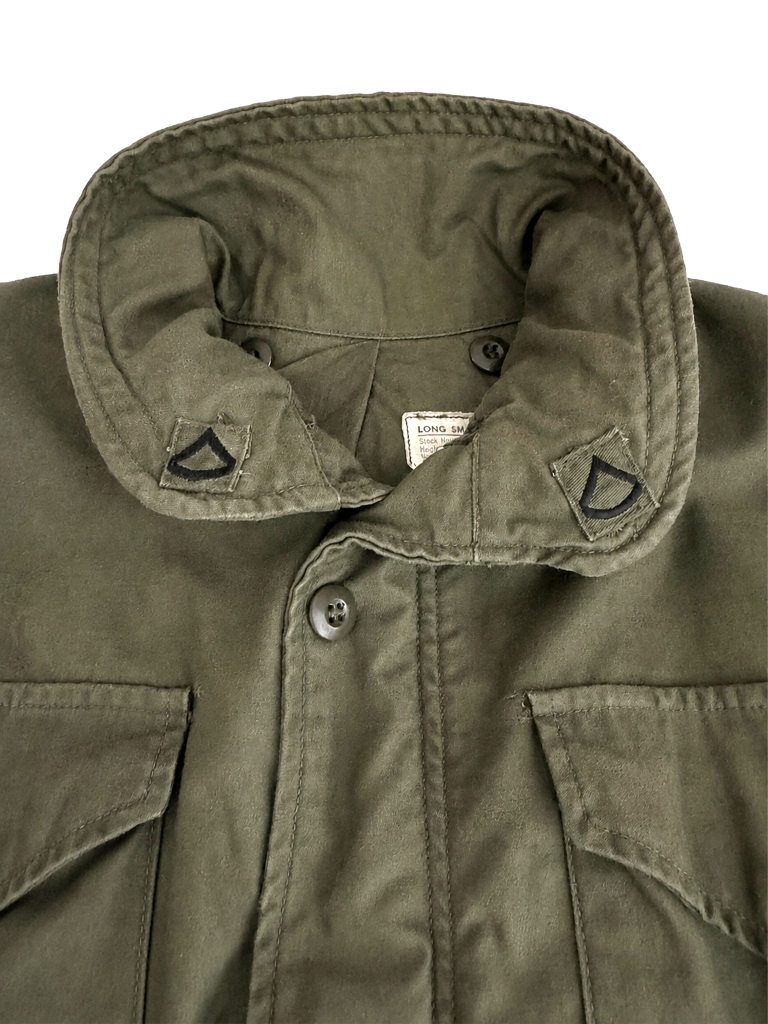
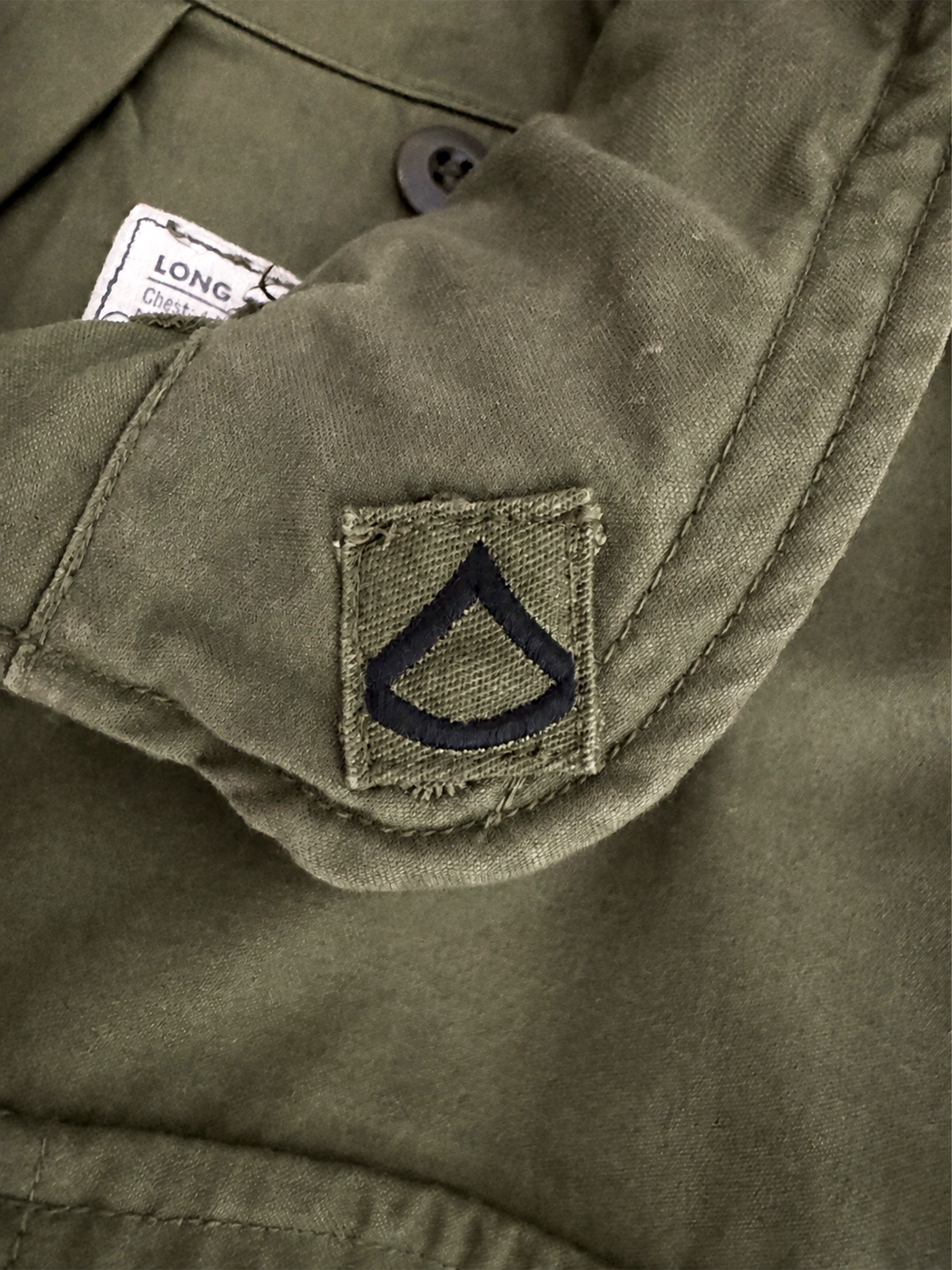
The coat retains its original military contract, size, and instruction labels, together with subdued U.S. Army Private First Class (PFC) rank insignia attached to both collar points. These surviving elements are preserved as found and form part of the specimen’s documented present configuration.
SURVIVING COLLAR INSIGNIA
Matching subdued black-on-OG U.S. Army Private First Class (PFC) rank insignia remain attached to both collar points. The insignia show age, edge wear, and attachment characteristics consistent with the surrounding garment and are preserved as part of the specimen’s surviving service configuration.
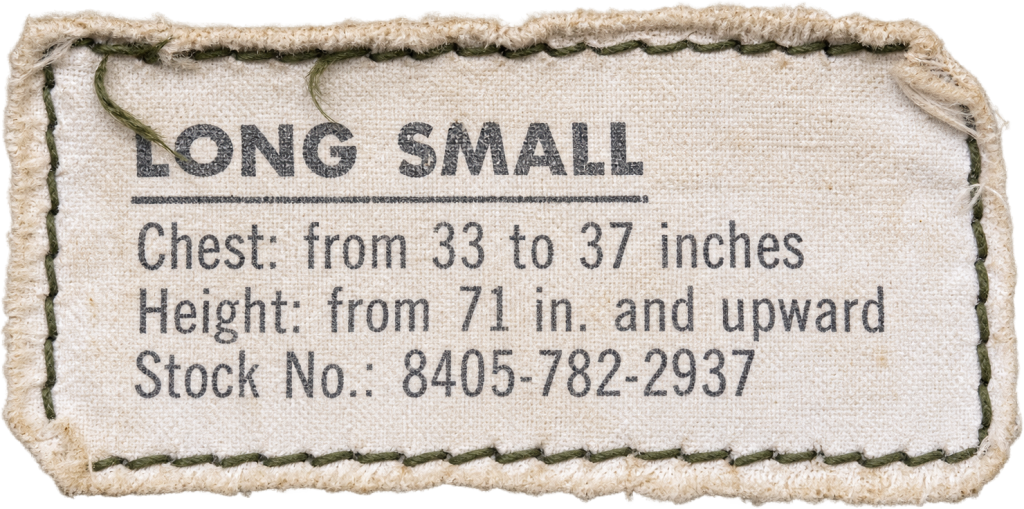
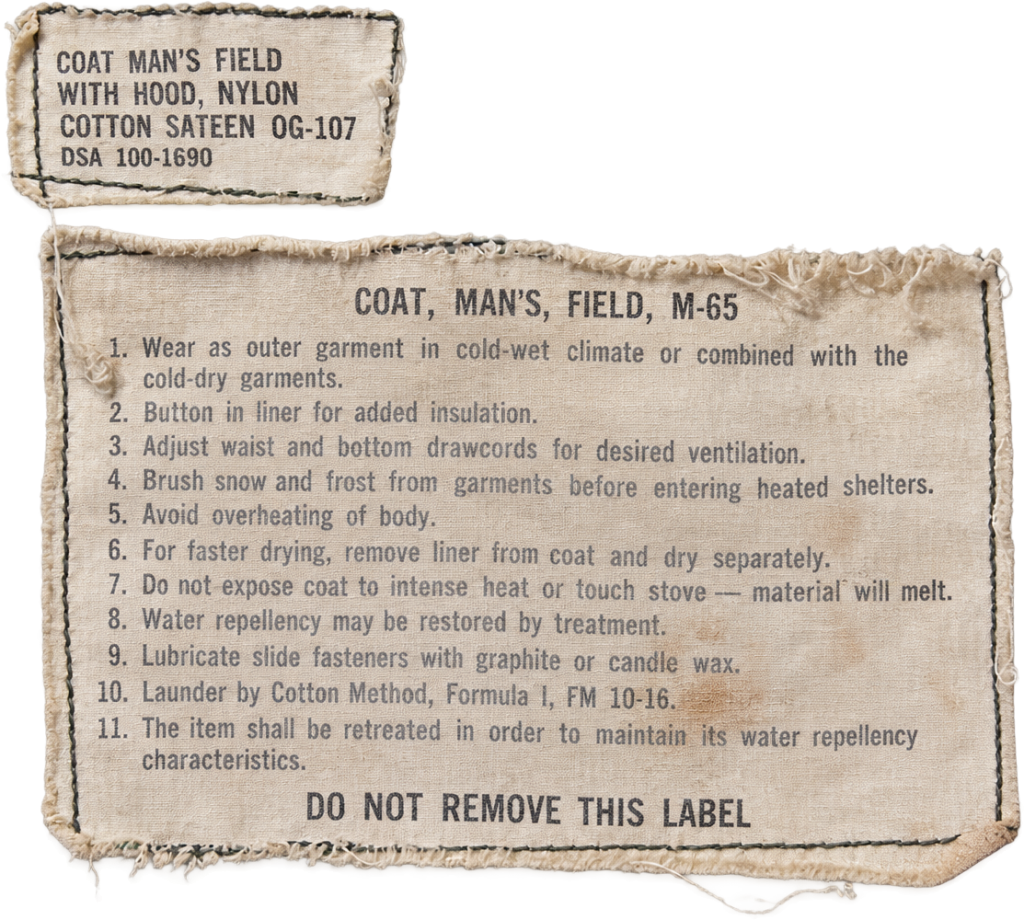
The surviving labels retain the garment’s original identification, sizing, operating, liner, cold-weather, drying, fastener-maintenance, and water-repellency information. Together with the surviving collar insignia, they document identifying and service-related elements that remain physically associated with the garment.
The contract label identifies the garment as:
COAT MAN’S FIELD
WITH HOOD, NYLON
COTTON SATEEN OG-107
DSA 100-1690
The original size label reads:
LONG SMALL
CHEST: FROM 33 TO 37 INCHES
HEIGHT: FROM 71 IN. AND UPWARD
STOCK NO. 8405-782-2937
SIZE & ACTUAL MEASUREMENTS
ORIGINAL LABEL SIZE: LONG SMALL
SHOULDER WIDTH: 52 CM
CHEST WIDTH: 56 CM
HEM WIDTH: 60 CM
BODY LENGTH: 82 CM
SLEEVE LENGTH: 65 CM
CUFF WIDTH: 20 CM
The original size label specifies a chest range of approximately 33–37 inches and a height of 71 inches and upward.
All measurements are taken manually and are approximate. Compare these measurements with a similar garment that fits properly rather than relying solely on the labeled size.
SPECIMEN ASSESSMENT
ISSUE STATUS: ISSUED
CONDITION: ★★★★ — EXCELLENT
SCARCITY: ★★★★ — VERY RARE
SCARCITY ASSESSMENT BASIS
The ★★★★ — Very Rare rating applies to this specifically defined specimen configuration rather than to the M-65 Field Coat as a general model.
The assessment considers the combined presence of a fiscal-year 1966 Alpha Industries contract, DSA 100-1690, First Pattern no-epaulet construction, Small Long size, surviving original military labels, and substantially original period configuration.
Comparable examples matching this combination of year, contractor, contract, configuration, size, and surviving original components are encountered only occasionally within specialist military-surplus and collector-market channels.
SCARCITY ASSESSMENT LIMITATION
Scarcity represents relative market availability and does not indicate physical condition, monetary value, collector demand, historical importance, or provenance.
The rating may be reassessed if meaningful new comparable market evidence becomes available.
INSPECTION CONDITION REPORT
OVERALL CONDITION
★★★★ — EXCELLENT
A well-preserved original issued specimen showing age-appropriate fading, surface marks, and service wear without significant structural deterioration.
SHELL
The OG-107 nylon/cotton sateen shell remains structurally sound. Natural variation in color, fading, surface marks, and wear associated with age and previous use remains visible.
No attempt has been made to cosmetically normalize the fabric or remove age-related characteristics.
CONSTRUCTION
The primary garment panels, collar, pockets, cuffs, seams, and internal construction remain intact and consistent with the original First Pattern configuration.
The absence of shoulder epaulets is retained as an original defining construction feature of this specimen.
HARDWARE
The coat retains its aluminum zipper hardware and original closure components. Applicable closures and adjustment components remain functional based on inspection.
LABELS & MARKINGS
Original contract, size, and instruction labels remain present.
Natural fading, discoloration, print wear, stitching irregularity, and other age-related characteristics have been retained and have not been restored or digitally reconstructed for documentation.
REPAIRS / ALTERATIONS
No material repairs or intrusive alterations observed during inspection.
NOTED DEFECTS
Natural fading, surface marks, and age-appropriate service wear are present.
Faint brownish-red discoloration is present on portions of the shell. The origin of the discoloration is unknown and cannot be determined from visual inspection alone.
No major structural defect is presently identified from the available inspection photographs.
HISTORICAL NOTE
The M-65 Field Coat was introduced during the 1960s as part of the U.S. military cold-weather clothing system.
Produced by Alpha Industries, Inc. under DSA 100-1690, this specimen dates to fiscal year 1966 and represents an early configuration of the M-65.
The First Pattern is principally distinguished by the absence of shoulder epaulets, a construction feature visible on this specimen.
Its 1966 procurement date places the garment within the Vietnam War period and during the rapid expansion of U.S. ground operations in Southeast Asia. This historical context describes the period in which the coat was manufactured and does not establish that this individual specimen was deployed in Vietnam.